Demystifying the Realities of the Contemporary Art World
29 September 2026
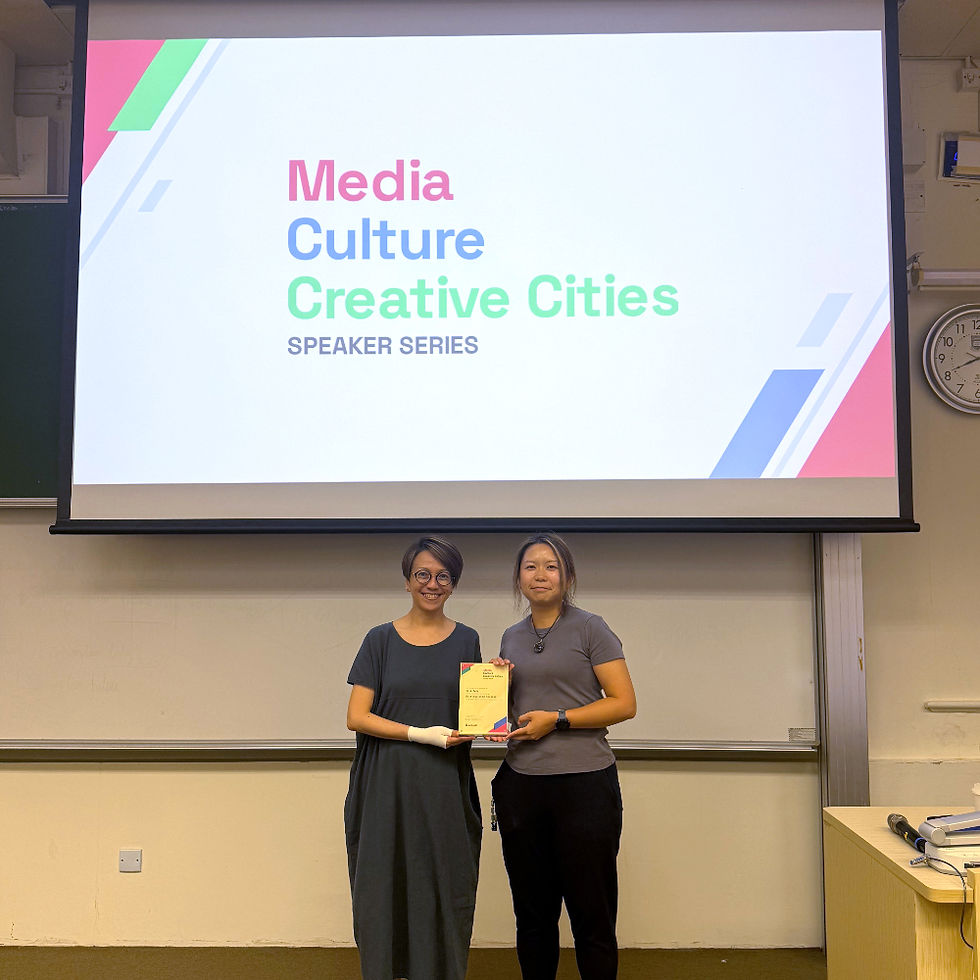
The romanticised notion of the curator as a jet-setting visionary selecting artworks for pristine galleries often obscures the gritty administrative and physical realities of the profession. This was the core message delivered by Ms Zoie Yung, a Hong Kong-based independent curator and exhibition consultant, during a recent installment of the Media, Culture and Creative Cities Speaker Series at the Department of Sociology, The University of Hong Kong.
Drawing from her diverse career—including her tenure at K11 in Shanghai between 2018 and 2020—Zoie offered students a candid look behind the scenes of art institutions, museums, and auction houses. She stressed that breaking into the industry requires humility and patience, recalling that her own initial duties at a gallery involved cleaning champagne glasses and scrubbing wooden walls rather than diving straight into high-level curatorial research.
A central theme of the talk was the misconception surrounding the glamour of art jobs. Zoie noted that curating is roughly 80 percent administrative work and only 20 percent creative practice. Aspiring professionals must master a versatile toolkit that bridges creative vision with commercial acumen. Organizing an exhibition involves far more than conceptual design; it demands rigorous profit and loss statements, clear deliverables, and a strong articulation of value for clients to secure funding. They must also navigate construction sites, understand spatial contexts, and oversee the heavy lifting of physical installations.
Addressing the broader landscape, Zoie touched upon the boom in curatorial studies that began in the 2010s, as tertiary institutions flooded the market with specialized programs, turning "curator" into a trendy buzzword. To stand out in a competitive job market, she advised students to adopt a "slasher" career model, balancing multiple roles—such as exhibition management and production consulting simultaneously—to build a professional profile and kick-start independent research.
Succeeding in the contemporary art world requires a keen awareness of global socio-economic shifts alongside fine arts expertise. Professionals must write extensively to maintain intellectual integrity, build long-term, trusting bonds with artists, and remain conscious of broader societal dynamics. By sharing her personal trajectory, Zoie provided HKU Sociology students with a grounded, realistic roadmap for navigating the multifaceted cultural and creative industries.
About the series: The Media, Culture and Creative Cities Speaker Series consists of high-level seminars where we invite leading industry figures and academic speakers to HKU Sociology to share their insights into the role that media, culture and creativity plays in shaping society.
