Finding Home in Macau Through Cinema
6 November 2026

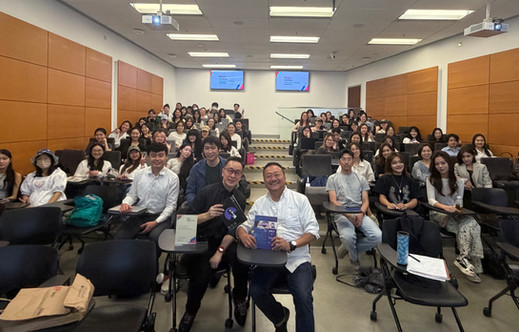
Macau’s transformation into a global tourism and casino destination has changed more than its skyline. Its effects on residents’ sense of home and belonging were explored by Dr Lei Chin Pang, Lecturer in the Department of Literature and Cultural Studies at The Education University of Hong Kong, in a talk for the Media, Culture and Creative Cities Speaker Series at the Department of Sociology, The University of Hong Kong. Titled ‘The Urban Pathology of a Casino City: Space in Cinematic Macau’, the talk examined how local films portray life beyond the city’s familiar tourist images.

Drawing on his research into Chinese-language cinema and urban space, Dr Lei explained that urban spaces reflect decisions about power, investment and whose needs take priority. Tracing Macau’s dramatic changes from 2004, he discussed how casino resorts and tourism have reshaped the city. Replicas of European landmarks create eye-catching settings for visitors, while overcrowding, expensive housing and threats to older neighbourhoods raise questions about how much space remains for local people.
Cinema offered a way to explore the personal consequences of these changes. Dr Lei discussed Sisterhood (2017), directed by Tracy Choi, and Our Seventeen (2017), directed by Emily Chan. Both follow characters who return to Macau after living elsewhere, only to struggle to reconnect with their hometown. Their stays in casino hotels highlight a troubling experience where they feel like a visitor in the place they once called home. Dr Lei described these hotels as ‘non-places’, spaces that provide temporary accommodation but little sense of belonging. By contrast, the films’ old markets, school grounds and rooftops carry memories of relationships and earlier lives. In Sisterhood, the protagonist takes over a cake shop she used to visit and runs the business herself. Through this return to a familiar place rooted in Macau’s distinctive blend of Chinese and Portuguese cultures, she finds a renewed sense of belonging.
The discussion also examined I Want to Be a Plaster Chair (2023), directed by Ao Ieong. Its protagonist’s difficulty finding a stable place to live brings the pressures of crowded housing and limited privacy into focus. Dr Lei’s reading connected the character’s anxiety with wider concerns about the loss of control over everyday living space.
These films also raised the question of who gets to tell Macau’s stories. Dr Lei noted the difficulties of representing local experiences in a city widely recognised through casinos and heritage attractions. Local filmmakers offer accounts of the city’s tensions, memories and identities that visitors may otherwise overlook.

Connecting film analysis with questions about urban development, the talk invited audiences to consider how cities can remain places of belonging for the people who live in them. It also showed how cinema can make the social costs of rapid change visible through ordinary lives.
About the series: The Media, Culture and Creative Cities Speaker Series consists of high-level seminars where we invite leading industry figures and academic speakers to HKU Sociology to share their insights into the role that media, culture and creativity plays in shaping society.